

Thứ năm, 17/09/2026 | 10:57


Nutritional quality and enzyme activity of rice bean (Vigna umbellata) collected in Dien Bien, Son La and Lai Chau provinces Abstract: Rice bean (Vigna umbellata) is a grain plant which provides nutrition for human and animal. It is also a good green-manure plant for keeping the soil surface covered in hill and mountain areas. Immature rice bean plants, young leaves and fruits are used as vegetables; and their seeds are raw materials for food processing. However, due to changes in cultivation and main attention to productivity, many indigenous bean varieties have gradually disappeared in Vietnam, thus assessing the genetic resources of beans, including rice bean, will form the basis for conservation and effective use of beans. This study presents the results of evaluation on some nutritional components and activity of such enzymes as protease, amylase at the germination stage of 6 rice bean samples. This study aims to determine the appropriate time for processing of high nutritional food as well as to provide the basis for selection, conservation of rice bean. The results showed that α-amylase and protease activities at the germination stage were much higher than those of the dry seeds; the NN14-DB got the highest α-amylase activity while the NN16-TP got the highest protease activity. The highest protein content was in rice bean seeds at the dry stage, and it declined when the seeds absorted maximal water and when the seeds produced sprouts. The decrease in the protein content of rice bean grains was associated with the increase in protease activity. The lipid content in the seeds of 6 rice bean samples, ranged from 0.68-0.95%, and the highest revealed in the model of NN18-LC (reached 0.95%). The isoflavones contents of the seed samples at the germination stage were very low. Keywords: α-amylase, isoflavones, proteases, proteins, rice bean. |
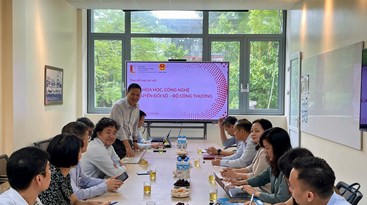
Sáng 16/9, tại Hà Nội, Cục Khoa học, Công nghệ và Chuyển đổi số, Bộ Công Thương có buổi làm việc với Đại học Bách khoa Hà Nội nhằm trao đổi về tiềm năng, định hướng hợp tác trong nghiên cứu khoa học, phát triển công nghệ, đổi mới sáng tạo và chuyển đổi số, gắn với yêu cầu phát triển các lĩnh vực công nghiệp, công nghệ chiến lược của ngành Công Thương.
16/09/2026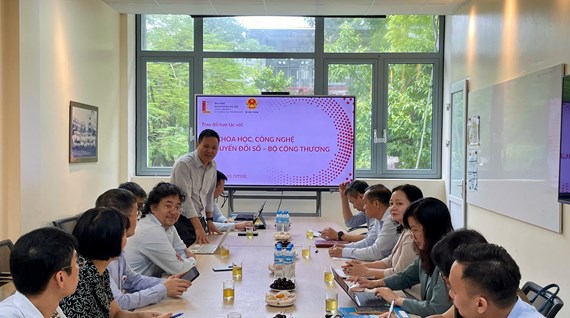
Sáng 16/9, tại Hà Nội, Cục Khoa học, Công nghệ và Chuyển đổi số, Bộ Công Thương có buổi làm việc với Đại học Bách khoa Hà Nội nhằm trao đổi về tiềm năng, định hướng hợp tác trong nghiên cứu khoa học, phát triển công nghệ, đổi mới sáng tạo và chuyển đổi số, gắn với yêu cầu phát triển các lĩnh vực công nghiệp, công nghệ chiến lược của ngành Công Thương.
16/09/2026